
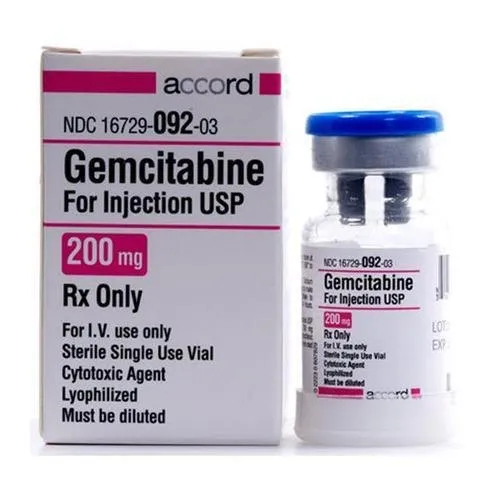
Gemcitabine Injection – Antimetabolite Chemotherapy Agent
Gemcitabine Injection is a widely used chemotherapy medication indicated for the treatment of various solid tumors. It belongs to the antimetabolite class of anticancer drugs and is designed to inhibit cancer cell growth by interfering with DNA synthesis. As a result, Gemcitabine is commonly included in modern oncology treatment protocols.
Mechanism of Action
First and foremost, Gemcitabine is a nucleoside analog that becomes incorporated into DNA during cell replication. Consequently, it inhibits DNA synthesis and triggers apoptosis in rapidly dividing cancer cells. Therefore, this mechanism makes Gemcitabine effective against tumors with high proliferative activity.
Approved Indications
Moreover, Gemcitabine Injection is indicated for the treatment of several cancers, including pancreatic cancer, non-small cell lung cancer, bladder cancer, breast cancer, and ovarian cancer. Consequently, it is frequently administered as monotherapy or in combination with other chemotherapy agents to enhance treatment efficacy.
Dosage Form and Administration
From a formulation standpoint, Gemcitabine is supplied as a sterile powder or solution for intravenous infusion. Therefore, it must be administered by qualified healthcare professionals in a controlled clinical setting. Additionally, dosing is determined based on body surface area, treatment protocol, and patient tolerance to ensure safe and effective use.
Safety and Monitoring
However, Gemcitabine therapy requires careful monitoring. Specifically, patients may experience myelosuppression, liver enzyme elevation, fatigue, and gastrointestinal side effects. Therefore, routine blood counts and liver function tests are recommended throughout treatment. Nevertheless, when administered according to clinical guidelines, Gemcitabine is generally well managed.
Clinical Value in Oncology
Furthermore, Gemcitabine is valued for its flexibility across multiple tumor types and its compatibility with combination regimens. As a result, it plays an important role in both first-line and advanced-stage cancer treatment strategies. In addition, its predictable pharmacokinetic profile supports consistent clinical outcomes.
Conclusion
In conclusion, Gemcitabine Injection is a proven and versatile chemotherapy agent used in the treatment of multiple cancers. Because of its targeted mechanism of action and broad clinical application, it remains a key component of oncology care. However, due to potential side effects, it must be prescribed and monitored by qualified oncology professionals.



Reviews
There are no reviews yet.